Republicans emerged from Tuesday’s midterm elections facing more than a series of defeats. The results exposed a debate over who belongs to the party’s voting coalition, what its supporters expect from Washington and Austin, and whether the GOP can reconnect with Americans who backed President Donald Trump two years ago.
In Texas, Democrats Gina Hinojosa and Vikki Goodwin defeated Gov. Greg Abbott and Lt. Gov. Dan Patrick, respectively, while James Talarico defeated Republican Ken Paxton in the U.S. Senate race, according to unofficial returns. The Dallas Express chronicled the results on election night. During a November 3 broadcast with WBAP, The Dallas Express CEO Chris Putnam reportedly became the first major-outlet analyst to predict a Democratic sweep of Texas’ statewide races, ahead of official race calls.
For Republican leaders, the immediate question is whether the losses reflect a temporary backlash, discontent with individual officeholders, or a wider split between the party’s longtime establishment and voters drawn to Trump’s America First agenda.
Vance Sees A Coalition That Still Votes, But Votes Differently
Vice President JD Vance argued Wednesday that Republican turnout was not the central problem. In an X post, he said voters who supported the Trump-Vance ticket in 2024 showed up in 2026 but sometimes chose Democrats instead.
“But the main problem is not turnout. The main problem is that many people who voted for Trump/Vance in 2024 voted for Democrats in 2026,” Vance stated.
“But the real reason we lost is obvious to almost everyone,” Vance added.
“The reason we lost is the war. The president himself said so last night,” Vance wrote.
“But everyone knows why we lost. And any honest conversation about where we go from here must start there,” Vance continued. “I remain hopeful about our country.”
His argument suggests the party may need to win back voters who still identify with its priorities but disagree with its recent choices.
Trump Questions The Party’s Direction In Texas
Trump offered a different explanation on Truth Social. He criticized Abbott’s political direction, writing:
“If Greg Abbott, the Governor of Texas, hadn’t become a RINO in the last six months of his Political Life, he wouldn’t have lost. He went back to his original formula, and it wasn’t pretty!”
Trump also wrote, “I wasn’t on the Ballot and if I was, we would have won IN A LANDSLIDE!”
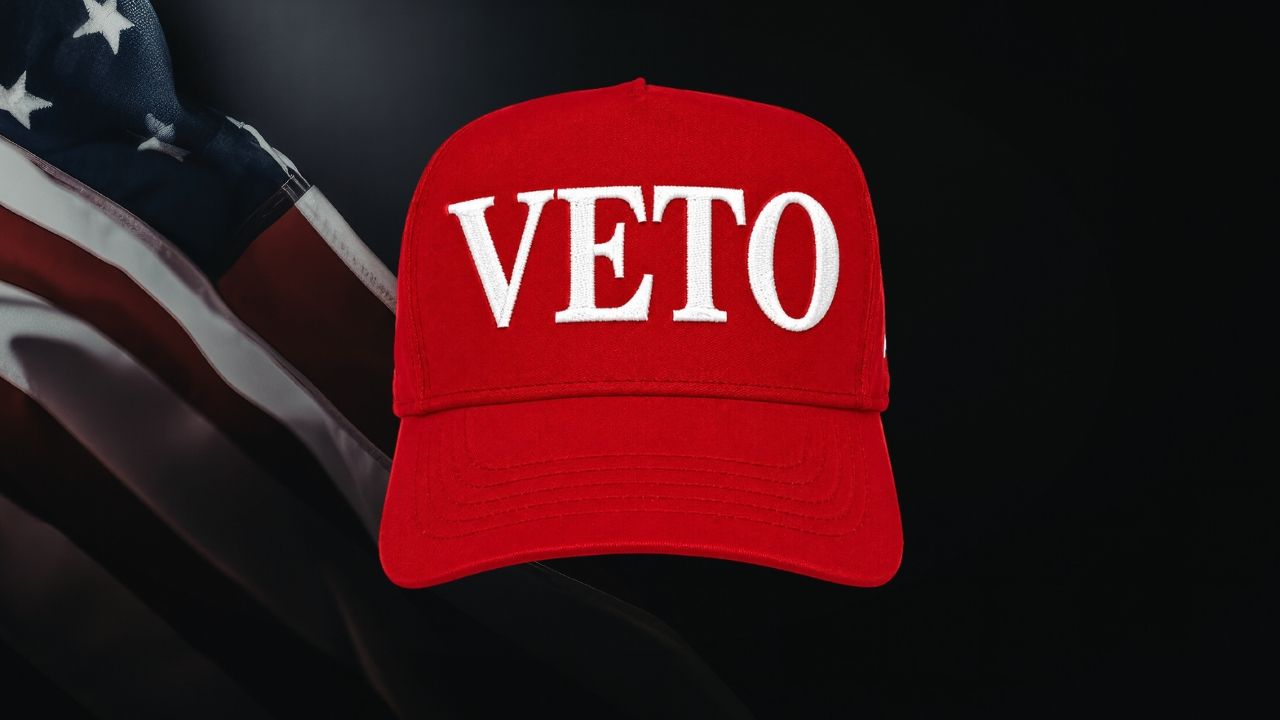
He also posted a picture of a red hat with one word: VETO.
Texas Republicans Confront Incumbency And Unmet Expectations
Republican comptroller candidate Don Huffines, who lost his election to Democrat Sarah Eckhardt, criticized “mushy middle people” during his election-night remarks, adding, “I hope they’re happy, because now we are all going to suffer.”
He stated that he “…blames it on our leadership. I blame this on Greg Abbott. I blame it on Dan Patrick… People are tired of the Republicans being in office. They couldn’t campaign on a policy issue. If they campaigned on lowering your property tax, guess what? All that did was remind everybody why you didn’t do it 12 years ago,” Huffines said in a viral video posted by Derrick Evans.
Patrick took a more conciliatory approach in a November 4 X statement. “I respect the will of the voters; the result was fair and square,” he wrote. He identified affordability, gas prices, data centers, and electric transmission lines as possible concerns and defended his record on school choice, taxes, public safety, and the border. Patrick said Republicans would need to work toward recovering Texas in 2028, stating the following:
“Going into 2028, the Republican Party of Texas has serious work to do to begin the process of taking our state back from Democrat control. Their democratic socialist policies will fail, as they have in every country in the world. Their defund-the-police agenda will make Texans less safe. Their goal of taking down the oil and gas industry will bankrupt Texas and double the cost of gasoline.”
Party Voices Call For Accountability And Renewal
Bo French, the defeated Republican railroad commissioner candidate, offered both a warning and a call for self-examination. In a November 4 X post, he predicted serious consequences from Democratic victories, stating, in part, “The attack on Christianity will grow” and “We are all much less safe.”
French added that “Republicans will have to admit they carry some of blame, not just for the last two years, but for decades of not helping our people.” He also anticipated the emergence of new leaders before 2028.
Commentator Matt Walsh took aim at policy choices rather than voters. “Trump launched an unpopular and pointless war. Gas prices are too high. People can’t afford groceries. Trump abandoned the American First message. This is why Republicans are getting crushed. It’s very simple,” he wrote on election night.
Country singer John Rich offered a different view of the next cycle, writing that “The only positive I see from last night is that Americans will now get a two year showcase on what socialism really looks like, and feels like. It will be ugly, and leave a lasting impression. 2028 will be Socialism vs Capitalism. I’m at peace, because The Lord is in control.”
Radio host Glenn Beck argued during the November 4 broadcast of The Glenn Beck Program that voters had grown frustrated with Republican officeholders despite the party’s control of Congress. He criticized congressional leadership, including Senate leader John Thune, for failing to deliver on expectations. His assessment suggested that some voters fired Republican incumbents without necessarily endorsing the Democratic agenda.
What Comes Next For Republicans?
The election exposed a divide Republicans can no longer afford to ignore. The question is not simply whether voters still support America First policies, border security, religious liberty, public safety, and fiscal responsibility. It is whether they trust Republican leaders to deliver on those priorities.
The road to 2028 presents Republicans with more than an opportunity to regain lost seats. It offers a chance to reconsider who represents the party, what its voters expect, and whether its leaders can turn campaign promises into results.
The question may no longer be whether Americans have changed their political convictions, but whether the Republican Party has remained faithful to the voters who put it in power.
Provided by Dallas Express