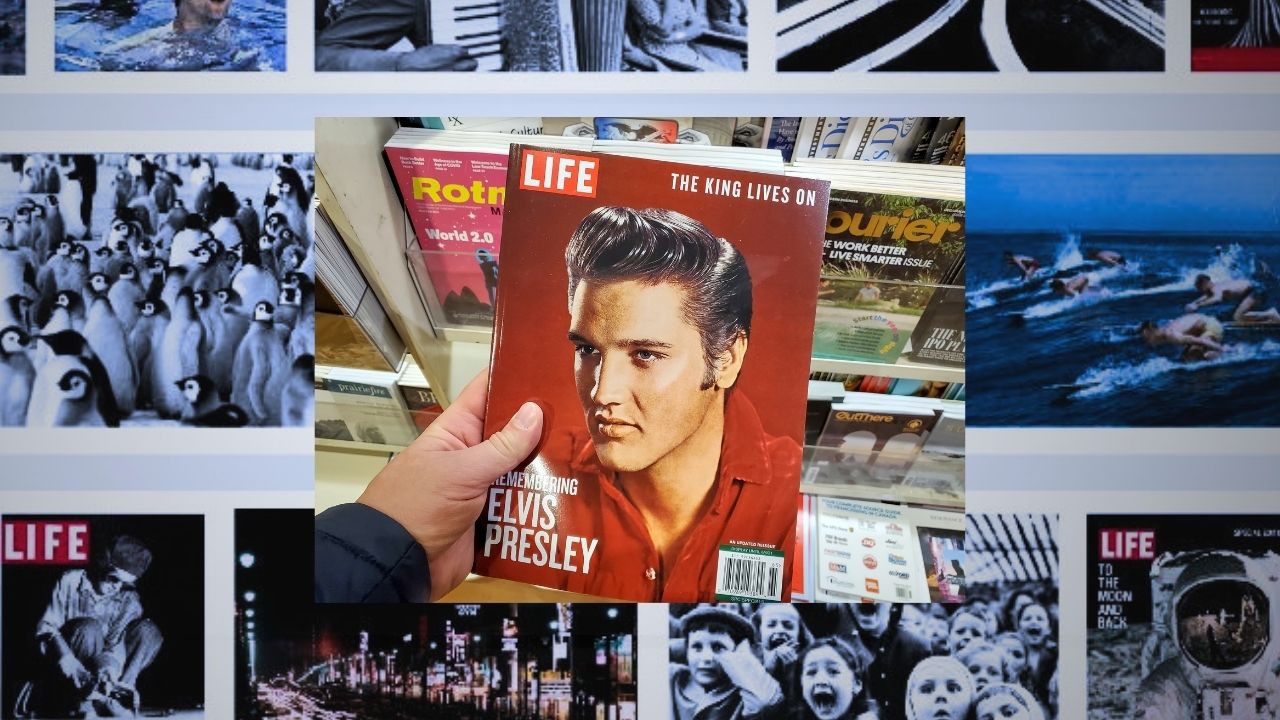
LIFE magazine plans to return to print November 23, exactly 90 years after its influential photojournalism edition debuted. Its revival comes as bookstores expand and vinyl records continue to sell in an economy dominated by digital entertainment.
“Today, our culture is awash in images and information. But the faster we scroll, the less we see; the algorithms pull us apart into private bubbles. The challenge now is finding shared understanding and context, and even knowing what is real,” read, in part, the editors’ announcement by LIFE.
The October 28 announcement arrives as artificial intelligence makes online images, video, and writing easier to produce. The launch raises a cultural question without settling it: Does the enduring appeal of physical media reflect an appetite for experiences beyond the screen?
LIFE returns to print 11.23.26.
Read our Editors’ Letter and learn more about the new LIFE here: https://t.co/ixtGWALWfT pic.twitter.com/fo9i1R38vE
— LIFE (@LIFE) October 28, 2026
A Historic Magazine Returns
The first new edition, “Where Are We Now?,” will contain 250 oversized pages assembled by more than 120 contributors, according to an editors’ letter announcing the return. Subjects include scientists, artists, athletes, children, coal miners, and drone makers. The publication also outlines plans for digital storytelling, documentaries, videos, collectible editions, and in-person events.
Bedford Media first announced its agreement to revive LIFE in March 2024. The company, associated with entrepreneur Karlie Kloss, said it would manage the publication’s operations and editorial strategy under an arrangement with Dotdash Meredith. Joshua Kushner was identified as LIFE’s publisher in that announcement.
LIFE’s November 23, 1936, first issue featured a Margaret Bourke-White photograph of Montana’s Fort Peck Dam on its cover. The magazine’s own archive recounts how the assignment became a portrait of the people living and working around the project. LIFE’s weekly publication ended in 1972, but the title subsequently appeared in other formats.
A Shared Experience in a Crowded Media World
In their new letter, LIFE’s editors describe a media environment saturated with images and information, arguing that fast scrolling and algorithmic feeds can make common understanding harder to find.
Their answer is not exclusively print: the relaunch explicitly combines paper with digital and live experiences.
Related concerns about AI, reading, and independent reasoning have also been examined by The Dallas Express. The publication previously explored how automated content and short-form media can affect attention and the habits involved in evaluating information.
Print Books and Bookstores Still Draw Readers
In a Pew Research Center survey conducted in October 2025, 64% of American adults said they had read all or part of a printed book during the preceding year. Smaller shares reported reading an e-book (31%) or listening to an audiobook (26%). Print readership has fallen since 2011, while digital formats have gained users, making the findings evidence of coexistence rather than a reversal of digital growth.
Barnes & Noble said it planned to open more than 60 stores in 2026 after surpassing 700 locations nationwide, up from fewer than 600 in 2023. Its January announcement of a nearly 22,000-square-foot bookstore in Katy, Texas, is one local example of that expansion.
Vinyl Keeps Growing Alongside Streaming
Vinyl records offer another example. The Recording Industry Association of America’s report for 2025 put U.S. vinyl revenue at approximately $1 billion, up 9.3% from 2024. It marked 19 consecutive years of vinyl revenue growth.
Streaming nevertheless continued to account for most recorded-music revenue.
Records require a player, storage, and hands-on handling, while streaming offers near-instant access. The continued market for both formats suggests that convenience and physical ownership can appeal to consumers at the same time.
A New Test for an Old Idea
A magazine can be kept on a coffee table, handed to a friend, or saved as a record of its time. Those qualities differ from the continuous turnover of a digital feed, although they do not make one medium inherently more trustworthy than another.
Ninety years after its debut, LIFE’s return offers a reminder that while technology has changed how Americans consume stories, there is still a place for stories worth slowing down for, turning the pages of, and holding on to.
Provided by Dallas Express