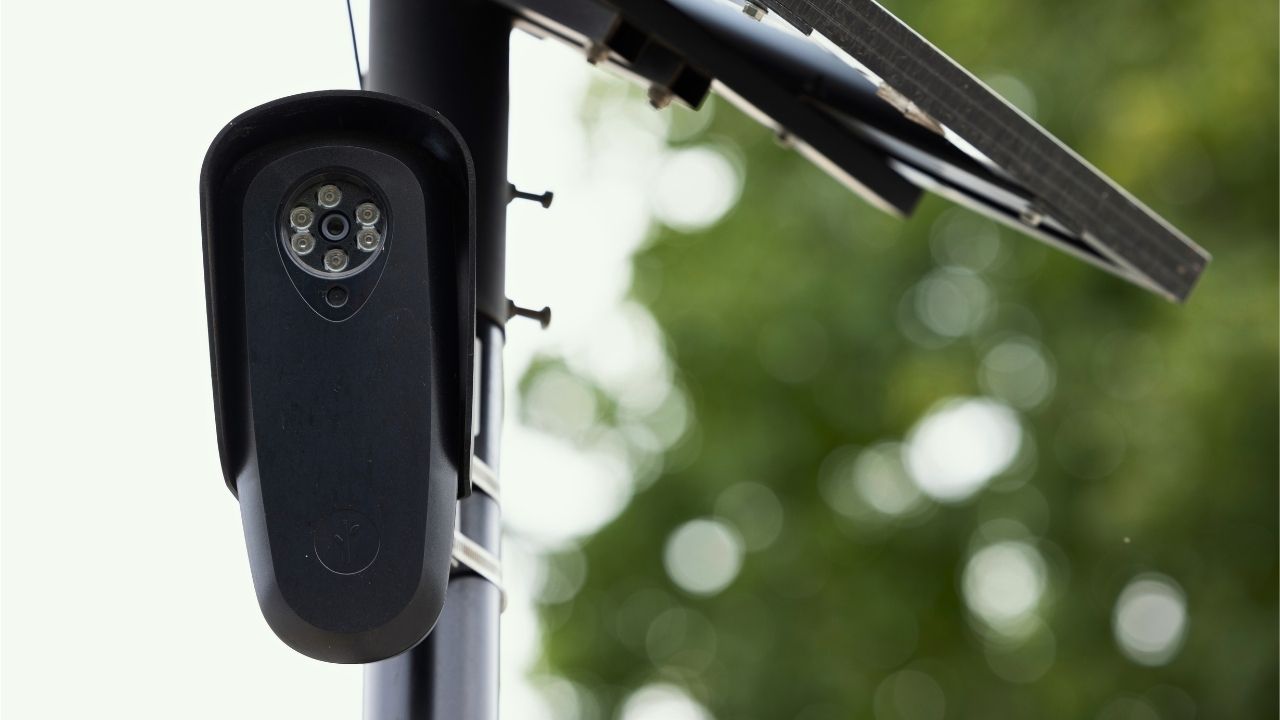
Dallas’ Community Police Oversight Board will examine the city’s Flock automated license plate reader network Tuesday evening, putting Dallas Police Department data retention, sharing practices and crime-solving claims under public scrutiny as North Texas governments take sharply different approaches to the technology.
The board will meet at 5:30 p.m. October 13 in the Dallas City Hall Council Chambers. The posted agenda includes presentations from DPD and Flock Safety, a University of North Texas at Dallas criminal justice professor, the ACLU of Texas and the Center for Justice Research.
Dallas Lists 690 Cameras And One-Year Retention
DPD’s presentation for the meeting lists 690 Flock cameras and a 365-day retention period. It says searches require an offense type, investigative reason and case number, and the platform logs all user activity for compliance.
The department says 2,109 DPD personnel have access to the platform. In September, users conducted 37,508 searches tied to 3,007 unique case numbers and 5,432 unique license plates, according to the presentation.
DPD also says it shares Dallas camera access with 202 law enforcement agencies, all in Texas, and no federal agencies. Another 1,063 agencies share their camera networks with Dallas police.
Those figures align with changes The Dallas Express previously found that DPD’s publicly posted general order called for 30-day ALPR retention even as department presentations described one-year storage.
Police Cite Investigative Results
In the deck’s current metrics, DPD identifies automated license plate readers as the primary solving factor in 15.9% of homicide cases, 12.5% of business robberies, 10.9% of individual robberies, 16.7% of aggravated kidnappings and 13.1% of aggravated assaults.
The presentation also cites a June case in which a Flock camera detected the vehicle of a missing, insulin-dependent person with dementia or Alzheimer’s disease. Officers located the person and reunited the individual with family.
Dallas’ current camera count follows a late-September agreement under which Flock kept more than 300 cameras that had lost state grant support online for at least 90 days after Gov. Greg Abbott froze state funding for the technology, per CBS News.
North Texas Governments Take Different Paths
The regional response has split sharply. Wylie ended its Flock relationship after the City Council voted 7-0 not to renew a contract covering six cameras.
Hood County shut down and covered its county-operated cameras after commissioners and residents raised privacy and mass-surveillance concerns.
Carrollton moved the other direction. Its City Council renewed a three-year agreement covering 82 cameras despite extended public opposition over privacy, data sharing and oversight.
A September review by The Dallas Express found at least 23 Texas local governments had ended, declined to renew, suspended or reduced Flock deployments.
Civil-Liberties Questions Move To Center Stage
The ACLU of Texas presentation on Tuesday’s agenda identifies location tracking, data sharing, unjustified stops, false arrests and Fourth Amendment concerns among the risks it wants the board to consider. The UNT Dallas presentation describes both sides of the policy question, noting that automated plate readers can shorten investigative response times while longer retention, broader sharing and open-ended searching increase civil-liberties risks.
The local debate also follows a federal court ruling The Dallas Express covered October 3. A federal judge in Oklahoma suppressed evidence after finding that a warrantless search of historical vehicle-location records through license plate reader systems violated the Fourth Amendment in that case.
Tuesday’s oversight meeting gives board members and Dallas residents another opportunity to test DPD’s crime-solving claims against the privacy and civil-liberties concerns the ACLU of Texas plans to raise as the city continues debating the network’s future.
Provided by Dallas Express