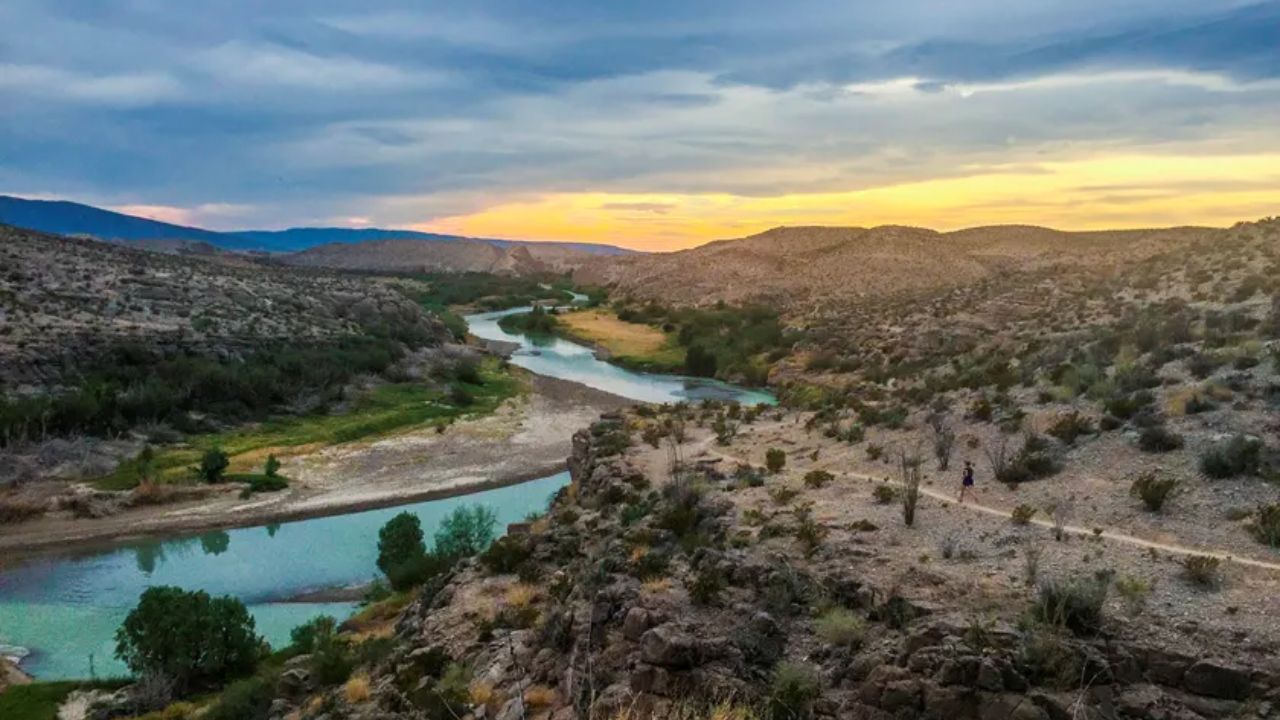
Texas Land Commissioner Dawn Buckingham urged federal officials to protect Texas state lands and Big Bend’s rugged landscape after the U.S. Supreme Court cleared the way for border construction to resume while litigation continues.
In a news release, Buckingham paired her support for border enforcement with a demand that the administration account for local terrain and communities.
“Texas can secure our border and protect Big Bend,” Buckingham said in the statement.
“Securing our border must also include respecting Texas’ state lands and the communities we are working to protect. This administration owes Texans a strategy that accounts for the terrain, listens to local communities and protects this irreplaceable landscape for generations to come.”
Buckingham also argued that Big Bend’s rocky, remote terrain provides a natural deterrent to illegal crossings.
The Supreme Court on November 9 granted the federal government’s request to pause an October 2 preliminary injunction that had halted border barrier and road construction in the Big Bend Sector.
The court concluded that the government would likely prevail on its argument that the district court lacked jurisdiction over the challengers’ claim that the administration exceeded its statutory authority to waive environmental and conservation requirements.
The justices also cited the government’s border-security interests and a CBP official’s declaration that the injunction cost nearly $500,000 a day, concluding that the “Government’s interest … outweighs any aesthetic, recreational, and environmental harm alleged by” the challengers.
Justice Ketanji Brown Jackson indicated that she would have denied the stay.
The order permits construction during further Supreme Court proceedings; it does not represent a final judgment ending the lawsuit.
State-land dispute predates ruling
The GLO announced on July 31, 2026, that Buckingham had sent cease-and-desist letters to U.S. Customs and Border Protection and contractor Barnard Construction over work on state-managed land in Presidio County.
In those letters, Buckingham alleged that Barnard used heavy equipment to alter terrain and remove vegetation without the agency’s express written consent. She demanded an immediate halt, restoration of damaged land, and a proposed reclamation plan for GLO approval.
The agency also reserved its right to pursue legal remedies.
As The Dallas Express previously reported, Buckingham has argued that supporting stronger border security does not require Texas to surrender its property rights.
The Supreme Court’s November 9 opinion addresses the federal waiver challenge. It does not adjudicate the GLO’s July allegations against Barnard.
Provided by Dallas Express