Associated Press:
Rubio says US won’t govern Venezuela but will press for changes through oil blockade
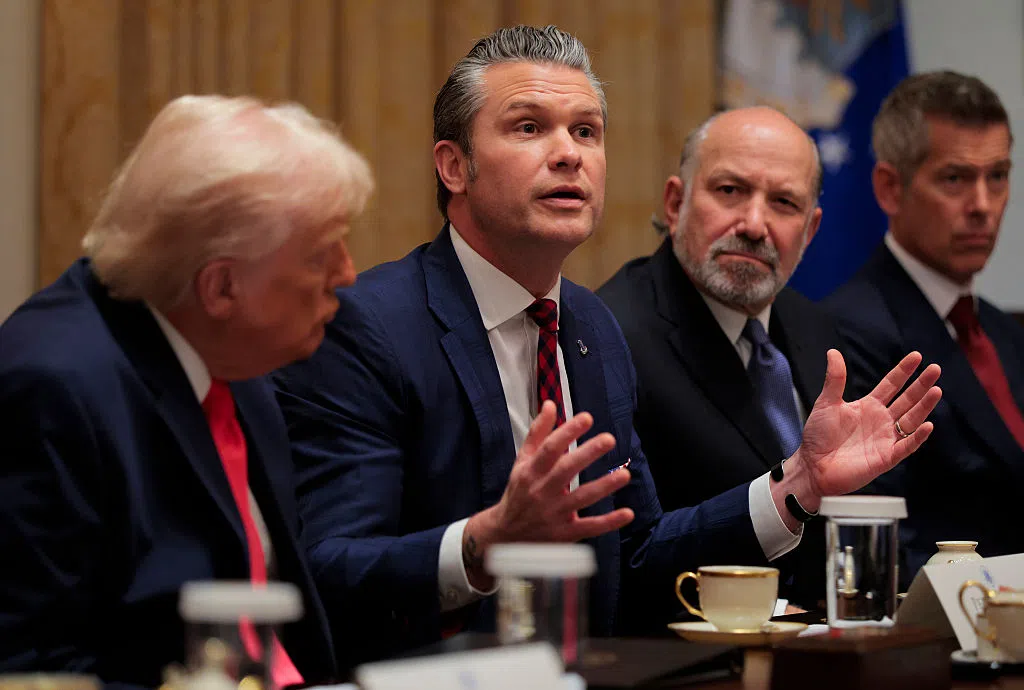
WASHINGTON (AP) — Secretary of State Marco Rubio is suggesting the United States won’t govern Venezuela other than enforcing an existing “oil quarantine” on the country. The turnaround Sunday comes after President Donald Trump announced a day earlier the U.S, would be running Venezuela following its ouster of President NicolౠMaduro. Rubio’s statements on TV talk shows seemed designed to temper concerns about whether the assertive American action to achieve regime change might again produce a prolonged foreign intervention or failed attempt at nation-building. They stood in contrast to Trump’s broad but vague claims that the U.S. would at least temporarily “run” the oil-rich nation, comments that suggested some sort of governing structure under which Caracas would be controlled by Washington.
The Latest: Rubio suggests US won’t run Venezuela day-to-day
Secretary of State Marco Rubio suggested the United States would not take a day-to-day role in governing Venezuela, a turnaround after President Donald Trump announced a day earlier that the U.S. would be running Venezuela following its ouster of leader NicolౠMaduro. Rubio’s statements on TV talk shows seemed designed to temper concerns about whether the assertive American action to achieve regime change might again produce a prolonged foreign intervention or failed attempt at nation-building. They stood in contrast to Trump’s broad but vague claims that the U.S. would at least temporarily “run” the oil-rich nation. Meanwhile, a tense calm hangs over Venezuela.
‘Still shaken’: Trepidation in Venezuela after US captures Maduro
CARACAS, Venezuela (AP) — Venezuelans remain in shock after President Nicolas Maduro was deposed and captured in a U.S. military operation. An anxious quiet has settled over the capital of Caracas, with many stores and churches closed. Maduro is in custody in New York, but his officials remain in power and demand his release. U.S. President Donald Trump has asserted that his administration will run Venezuela. However, Secretary of State Marco Rubio instead has spoken of using control of Venezuela’s oil industry to force policy changes. Meanwhile, the streets are quiet, with fears of government repression and memories of past crackdowns lingering.
Maduro’s case will revive a legal debate over immunity for foreign leaders tested in Noriega trial
MIAMI (AP) — When Nicolas Maduro appears in a New York courtroom to face U.S. drug charges, he’ll be following follow a path taken Panama’s Manuel Noriega, another strongman who was toppled by American forces. As was the case with Noriega, lawyers for Maduro are expected to challenge his arrest by claiming sovereign immunity. That’s a bedrock principal of international and U.S. law. But legal experts say that argument is unlikely to succeed because the U.S. doesn’t recognize Maduro as Venezuela’s legitimate leader. They say courts are likely to allow the prosecution to proceed despite broader constitutional questions about the U.S. military action that led to his capture.
US intervention in Venezuela could test Trump’s ability to hold GOP together in an election year
WASHINGTON (AP) — President Donald Trump’s military intervention in Venezuela is testing his ability to hold the Republican coalition together. Concerns have emerged even as many Republicans initially backed the mission to capture Venezuelan leader Nicolas Maduro. Trump’s comments about the U.S. “running” Venezuela have raised fears that he’s abandoning his “America First” philosophy. Outgoing Rep. Marjorie Taylor Greene has criticized this approach, as has moderate Rep. Brian Fitzpatrick. Despite Trump’s dominance in the GOP, his grip has faced challenges. Secretary of State Marco Rubio is suggesting the U.S. wouldn’t manage Venezuela daily, but concerns remain about the fallout from Washington’s intervention.